
English| EUR
Suggested for you
More currencies
Choose a language
Truffle hunting in Piedmont follows two overlapping calendars tied to different species and soil temperatures. White truffles anchor autumn and early winter, black truffles span late spring through early autumn, and each requires distinct woodland conditions. The Langhe hills maintain professional hunting activity year-round except during mid-winter frost and mid-summer heat peaks.
Quick answer
When to go truffle hunting in Italy depends on the truffle species you want to find. White truffles (Tuber magnatum) are harvested from October through December, with peak quality in November. Black summer truffles (Tuber aestivum) run from May through September. Both species require guided hunts with trained dogs in Langhe's hazel and oak woods. Weather matters as much as calendar dates—recent rain and mild temperatures increase truffle aroma and detection rates.
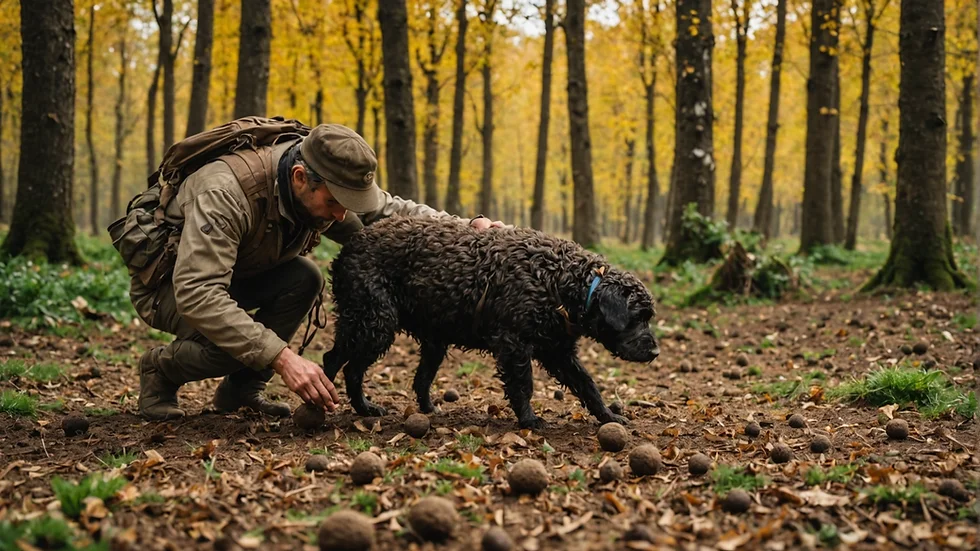
The Piedmontese truffle calendar is governed by underground fungal biology, not tourist convenience. Tuber magnatum pico, the coveted white truffle, fruits only when autumn soil temperatures drop below 15°C and overnight humidity climbs above seventy percent. This creates a narrow harvest window from early October through late December, with the Alba International White Truffle Fair anchoring the middle weeks. Hunters and their Lagotto Romagnolo dogs work the same hazel groves their families have held rights to for generations, often before dawn when scent concentration is highest. Black summer truffles occupy the opposite thermal niche. Tuber aestivum thrives in warmer soil from May through September, preferring the dappled shade beneath oak canopies in Roero and Monferrato. These truffles lack the white's pungency but grow more abundantly and tolerate broader conditions. June and July yields are reliable; August can be sparse if drought stresses the mycelium. Professional trifolau—truffle hunters—shift between species and microclimates as the seasons turn, reading soil moisture and canopy density the way sailors read wind. Weather disrupts the calendar more than any formal regulation. A dry September delays white truffle emergence by weeks. Unseasonable warmth in November shortens the peak window. Conversely, steady October rains can trigger an early flush that surprises even veteran hunters. The Langhe's limestone soils drain quickly, so precipitation three to five days before a hunt is ideal—enough to activate truffle volatiles without waterlogging root zones. Timing a visit around weather forecasts rather than fixed dates increases the likelihood of a productive hunt. Practical access aligns with the agricultural calendar. Most truffle hunting tours operate daily from 08:00 to 20:00 year-round, but autumn and spring book fastest due to overlapping harvest festivals and optimal weather. Winter hunts offer solitude and the prestige of white truffle season; summer hunts trade exclusivity for consistent black truffle availability and easier woodland navigation. Visitors planning when to go truffle hunting in Italy should match their schedule to the species they prioritize, then monitor regional rainfall in the two weeks before arrival.
“Timing a visit around weather forecasts rather than fixed dates increases the likelihood of a productive hunt.”
Our administrative support team is available daily to assist with your truffle hunting inquiries and tour planning in the Langhe region. The office remains open consistently throughout the week to ensure you have the necessary information for your visit.
Truffle hunting in the Langhe, Roero, and Monferrato hills does not require an entrance fee, as the woods are public territory. However, hunting truffles legally requires the services of a professional truffle hunter who holds the necessary regional license.
Verdict: While there is no entrance fee, visitors pay for professional guide services, with costs varying based on the specific tour provider.
Truffle hunting in Langhe requires booking through a licensed trifolao, as regional law prohibits independent foraging. The process typically takes 2–3 days from inquiry to confirmation during peak season.
Visit the official Langhe tourism site at https://www.visitlmr.it to find vetted hunters, or ask your accommodation for referrals. Many independent guides lack proper permits, so verify credentials before paying deposits.
Email or call +39017335833 during business hours (08:00–20:00 daily) to check availability. October and November slots fill quickly, so contact earlier if hunting white truffles.
Most hunts depart between 08:00–10:00 or 15:00–18:00 to match truffle activity patterns. Clarify the exact woodland meeting point, as GPS signals are weak in hill forests and roadside descriptions can be vague.
Specify whether you need English commentary and how many participants will join. Guides typically limit groups to 4–6 people per dog to maintain a functional hunt, not a crowded spectacle.
The guide will send final details including what to wear, whether a tasting is included, and cancellation terms. Print or screenshot this, as mobile service is unreliable in remote truffle zones.
Truffle hunting in the Langhe hills requires advance coordination with a licensed guide and proper gear for woodland terrain.
Everything you need to know about when to go truffle hunting in italy
The Langhe, Roero, and Monferrato hills offer diverse opportunities throughout the year, though specific seasons dictate which tubers are available. Planning your visit requires checking local regulations to ensure you know when to go truffle hunting in italy safely.
The primary season for the prized white truffle in Piedmont typically runs from late September through January. Outside of this peak window, other varieties like the black summer truffle are sought, making it important to research when to go truffle hunting in italy based on your specific culinary interests.
Yes, searching for tubers requires a professional guide and a valid license to operate in public woods. Unauthorized foraging is prohibited, so booking a licensed tour is the only legal way to participate when to go truffle hunting in italy.
Late summer and autumn provide the most comfortable conditions for woodland exploration in Northern Italy. This period offers stable weather, which is ideal for those planning when to go truffle hunting in italy alongside other vineyard activities.
There is 0 EUR entrance fee for accessing public woods, but professional guiding services are required and involve separate costs. You will need to budget for these expert-led experiences when to go truffle hunting in italy.
The optimal daylight window for navigating the woods and observing the dog's activity is between 08:00 and 18:00. Arriving within this timeframe ensures the best experience for both you and the truffle hunter.
Most tours are suitable for families and children, as the experience focuses on woodland education and canine interaction. It remains a popular family activity when to go truffle hunting in italy during the harvest season.
Mid-week visits or early morning sessions are often less crowded than weekends during the peak autumn months. Choosing these quieter times will help you enjoy a more intimate experience when to go truffle hunting in italy.